Calculate Potential Profit With Commercial Real Estate ROI Calculator
Calculate your investment property’s potential profit, cash flow, and overall return on investment in seconds. Ensure you buy smart to maximize your real estate income.
Investment Inputs
ROI Projection

Getting strong returns from commercial real estate is more than possible. In fact, over a 25-year period, private commercial property investments have slightly outperformed the S&P 500. That historical strength, however, meets a new reality.
The current market of 2024 presents a tricky landscape of shifting interest rates and tax rules. For any investment property, from office buildings to warehouses, simple math no longer cuts it.
True profit analysis requires digging into operating expenses, debt service, and accurate rental income projections. From our experience, this is where many investors stumble.
They might glance at purchase price and market value, but they miss the full picture of cash flow and net operating income.
This article will show you how a precise commercial real estate ROI calculator transforms your investment strategy.
We will equip you to move beyond guesswork, compare similar properties with confidence, and make real estate purchase decisions that safeguard your capital.
This deep dive into ROI calculation continues our series on smart valuation tools. You can start with a free home value estimator, strengthen your core skills with a detailed property value calculator, and then advance to a sophisticated commercial real estate valuation calculator for your next deal.
Short Summary
- ROI tools help investors compare deals and understand real performance.
- Key metrics like NOI, cap rate, and cash flow shape every decision.
- Clean inputs lead to accurate projections and reliable outcomes.
- Market trends in 2025 highlight the importance of smart planning.
- Calculators support stronger choices and long-term investment confidence.
Essential Metrics: Net Operating Income, Cap Rate, and Cash Flow Analysis
These core metrics help investors judge performance with real clarity and avoid surprises that show up after closing.
Understanding NOI
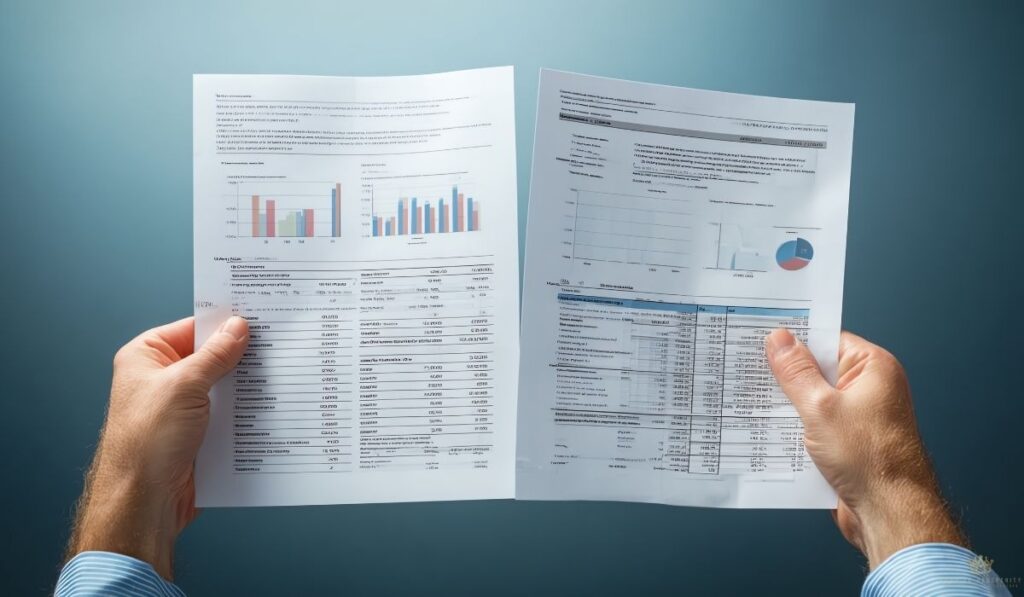
Net operating income shows how a property earns once major operating expenses are paid. We calculate net operating income NOI by subtracting property taxes, maintenance costs, and repair costs from total rental income.
Strong NOI signals strength across the whole deal. NOI keeps investors honest, and we’ve seen how true that feels when comparing properties.
How NOI Drives Cap Rate
Cap rate helps investors gauge income-based value. The cap rate calculation is simple. Divide NOI by the property price or current market value to get the capitalization rate. A higher cap rate points toward more yield although it carries added risk.
An example involved a mixed-use rental property that looked attractive until we checked deferred repairs. The cap rate jumped because of that risk factor, not because of strong performance.
Understanding Cash Flow
Cash flow measures how much money remains after paying mortgage payments, financing costs, and routine bills. Annual cash flow shows how the property performs year over year and helps investors compare options with different pricing.
We ask whether the income covers expenses without creating pressure. That simple question guides many decisions.
Cash on Cash Return
Cash on cash return compares annual cash flow to the initial down payment. Many investors use this to judge how fast their capital comes back.
A helpful example involved a small warehouse that returned nearly 9 percent on cash invested while a similar project returned 4 percent. That difference shaped the investor’s plans for the next deal.
Debt Service Coverage Ratio (DSCR)
The debt service coverage ratio shows whether NOI can support annual debt service. Lenders look for DSCR levels above 1.20 in many markets although that target shifts with demand.
Healthy DSCR gives confidence since the property can support its loan payments without strain. In effect, DSCR is the silent guardian of ROI. Strong DSCR often predicts stronger profit potential through the holding period.
Understanding ROI as a Key Metric for Real Estate Investments
To build wealth, you need to measure it correctly. For most investors, return on investment stands as the ultimate key metric. It tells you the total percentage gain or loss on your capital.
This important metric helps you evaluate a property’s profitability while keeping risk in clear view. Think of ROI as your report card for the entire project.
ROI vs. Cap Rate: Seeing the Full Picture
A common mix-up happens between ROI and cap rate. Here’s the simple difference. The capitalization rate is a snapshot of a property’s performance at one moment. You calculate it as net operating income divided by current market value.
It ignores debt. ROI, however, gives you the full movie. It factors in your financing, your loan payments, and the long-term hold. To put it simply, cap rate tells you what the property earns. ROI tells you what you earn.”
Why ROI Benchmarks Shift Across Asset Classes

This key metric matters for all real estate investments, but benchmarks change. An office building in a major city and a storage facility in a growing suburb are different beasts. Their income stability, operating expenses, and growth curves vary.
A 12% ROI might be stellar for a stable commercial property like a medical office. The same number could be mediocre for a riskier, value-add industrial warehouse project. You must compare similar properties within the same asset class for an apples-to-apples look.
The Due Diligence That Powers Your Numbers
Accurate ROI starts long before the calculator. Thorough due diligence builds your assumptions. This means verifying property taxes with the county, not just trusting the listing. It involves getting real quotes for repair costs and operating expenses.
We once analyzed a charming retail space, but a call to the planning department revealed a major road project that would limit access for a year. That changed everything. This legwork protects you and makes your investment returns predictable.
Hands-On Management: Your Secret Weapon for Returns
Finally, smart execution after the real estate purchase boosts your annual return. Hands-on management sounds tedious, but small efficiencies create big value. Implementing a digital rent collection system, for example, can slash administrative time.
This saves valuable time and reduces your own risk from manual errors. That extra cash flow goes straight to your bottom line. The question isn’t just what you buy, but how you run it.
We Guide People How To Invest In Real Estate
Commercial Real Estate ROI Calculator: Step-by-Step Guide to Accurate Results
So you’ve found a potential deal. How do you know if the numbers truly work? A robust commercial real estate ROI calculator moves you from guesswork to confidence. This tool synthesizes all the variables into a clear annual rate of return.
Let’s break down how to use it.
What You Put In (The Inputs)
Every calculation starts with your data. You must input the purchase price, closing costs, and your loan terms, including the interest rate and amortization period.
Then, project the income side: your expected rental income, a realistic vacancy rate, and an expense ratio for ongoing costs. Forgetting closing costs is a classic rookie mistake that skews results.

What You Get Out (The Outputs)
A good ROI calculator will crunch these numbers into a full financial portrait. Key outputs include your net operating income, annual cash flow, cash on cash return, and overall ROI.
Advanced models also provide the internal rate of return (IRR), which accounts for the time value of money. This suite of answers shows if the property generates enough regular cash flow for your goals.
Following the Steps: A Quick Example
Imagine a $1.2 million real estate purchase. Here are the following steps:
1. Enter Costs & Revenue: Input the $1.2M purchase price, $30k in closing costs, and projected annual rent of $96,000.
2. Adjust for Reality: Apply an 8% vacancy rate and a 40% expense ratio. This gives you a more reliable net operating income.
3. Integrate Financing: Add your loan details—a 25-year amortization period at a 6.5% interest rate. The calculator will now show your annual mortgage payments and debt service.
4. Review the Results: Analyze the resulting cash on cash return, ROI, and annual cash flow. Does the annual rate meet your benchmark?
Interpreting Your Investment Returns
Your investment returns must justify the effort and capital. Look at the cash on cash return first—this is your yield on the actual cash you deployed. Then, examine the regular cash flow. Is it robust enough to cover surprises?
Finally, the overall ROI tells you the project’s long-term potential. Ask yourself: does this property generate the wealth I expect for the risk I’m taking?
A Non-Negotiable Tip: Stress Test Your Deal
The current market is defined by volatility. Never rely on a single, perfect-scenario calculation. Always run scenarios with rising interest rates.
What if your vacancy rate jumps two points? This stress-testing ensures your investment strategy can withstand shifts and protects the value of your investment. It turns a good real estate purchase into a resilient one.
2025 Trends Impacting Commercial Real Estate ROI: Taxes, Rates, and Risk Mitigation
Understanding broader trends in 2025 gives investors a sharper view of how returns shift across cycles and asset types.
Interest Rates and Financing Pressures
Federal funds rates now sit near 3.75 to 4.00 percent. Commercial loans often range between 5.16 and 6.80 percent. These figures increase financing costs and tighten margins for many buyers. Higher loan payments reduce expected ROI and push investors to rethink offers.
Rising numbers influence market expectations and adjust valuations. We sometimes ask whether the deal still works if rates climb slightly. That quick check exposes areas needing attention.
Tax Incentives That Affect ROI
The One Big Beautiful Bill keeps drawing interest because taxes influence investment outcomes. 100 percent bonus depreciation remains active through 2029. The higher QBI deduction could help certain operators increase returns on qualifying real property.
These rules change often. Investors should confirm details with tax professionals since investment advice depends on each situation. Remember, smart tax planning raises ROI faster than rent bumps, and we see proof of that often.
Other Risks Investors Monitor
Multiple outside factors shift performance. Property taxes rise in some counties. Closing costs climb as lenders adjust standards. Several states, including Texas, updated privacy and zoning rules.
Each update adds additional risk for investors reviewing pro formas. We check these details carefully since small adjustments can change outcomes across an entire hold period.

Asset Class Movements
Each asset class behaves differently this year. Industrial properties continue showing solid demand while office buildings face longer vacancy periods. We use calculators to compare results.
For example, an older office project offered lower pricing, although the industrial option produced stronger long-term gains. Comparing numbers made the answer obvious.
Stabilizing Cash Flow Through Better Strategy
Calculators help protect cash flow when markets shift. They show how market value and the current market influence returns. Sharing these tools across communities encourages smarter decisions and clearer strategies for the future.
Final Thoughts
A commercial real estate deal feels much easier to judge once the numbers sit in front of us. A solid roi calculation cuts through the noise and helps us move with confidence.
Knowing how net operating income, cash on cash return, and annual cash flow work together strengthens any investment strategy. These habits build better choices and support real investment returns and steady long term gains.
Take the next step and explore more resources on our homepage.